

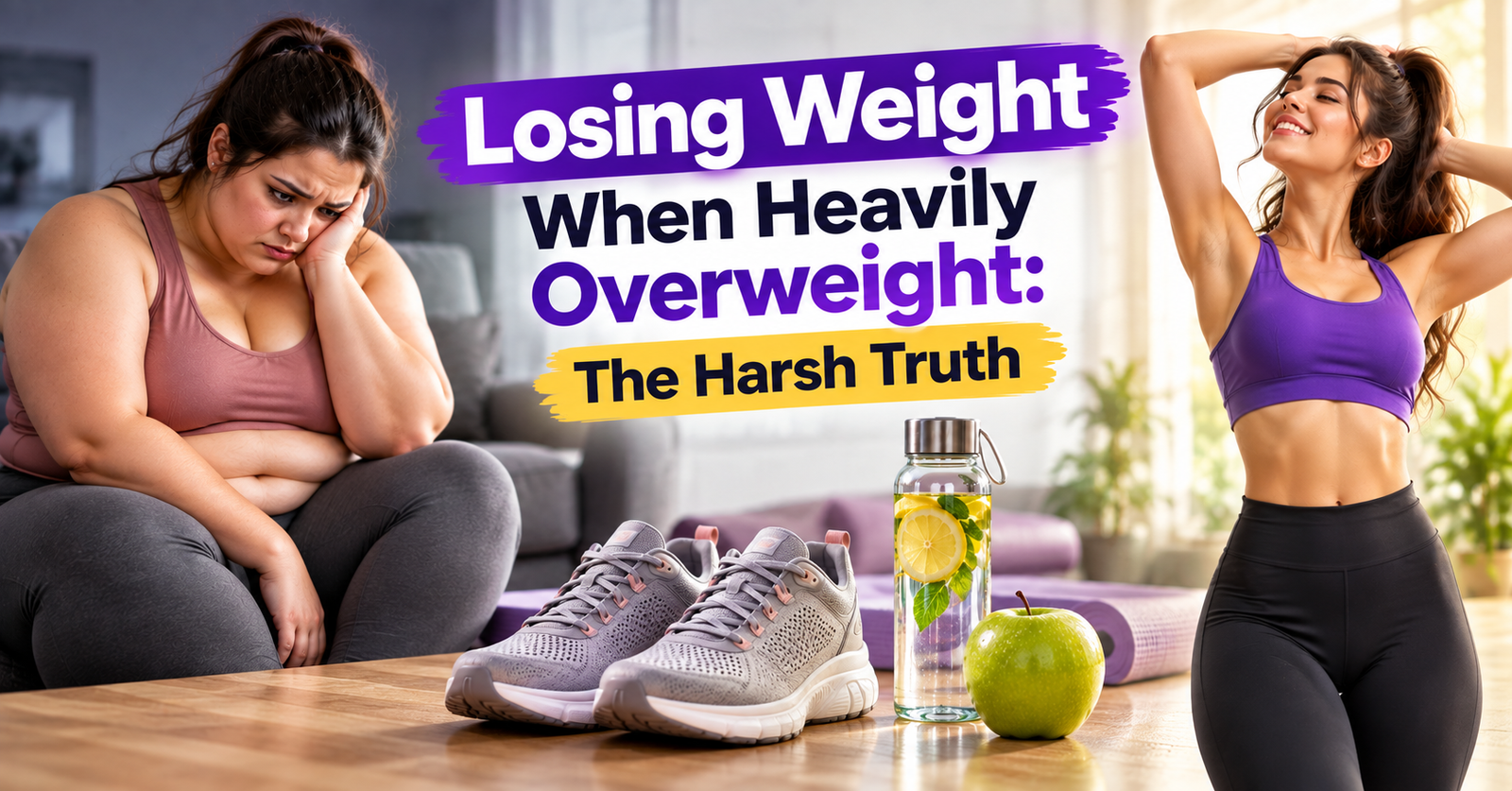
Mainstream fitness influencers love telling people that weight loss is simply a matter of calories in versus calories out. But when you are heavily overweight, your physiology operates under completely different biological rules. Severe joint strain, deep leptin resistance, and chronically elevated fasting insulin make standard gym workouts both dangerous and discouraging.
High-impact workouts (running, jumping jacks, burpees) when carrying 50+ pounds of excess weight place up to 400% more shear force on knee cartilage and spinal discs. Protecting your joint mobility is priority #1 before chasing high calorie burn.
1. The Biological Roadblocks You Are Fighting
Your fat cells produce abundant leptin (the satiety hormone), but neural pathways in the hypothalamus are blocked, signaling constant starvation.
- Constant physical hunger despite eating
- Elevated baseline insulin preventing lipolysis
- Sluggish thyroid conversion (T4 to active T3)
Excess mass compresses the delicate synovial fluid cushion between knees, hips, and ankles, causing severe micro-friction.
- Early morning knee stiffness and swelling
- Lower back inflammation after brief standing
- High injury risk from traditional gym routines
2. The Joint-Friendly Weight Loss Hierarchy
| Phase | Physical Protocol | Nutritional Focus |
|---|---|---|
| Phase 1 (Weeks 1–4) | Low-impact walking & recumbent bike (15 mins) | Cut all liquid sugar & establish 12-hour overnight fast |
| Phase 2 (Weeks 5–8) | Water aerobics & bodyweight chair squats | 30g protein per meal + green tea polyphenols |
| Phase 3 (Weeks 9+) | Progressive resistance bands & 6,000 steps/day | Support joint synovial fluid & AMPK metabolic signaling |
3. Safeguarding Joint Mobility During Weight Loss
To keep moving without debilitating pain, maintaining healthy synovial fluid and cartilage cushioning is crucial. You can learn how specialized marine botanicals and hyaluronic acid complexes support knee and hip comfort in our detailed Joint Genesis Mobility Case Study.